What Makes an Olive Oil Gift Set from Italy Worth Giving
A worthwhile olive oil gift set from Italy does four things: it names its origin down to a grove, protects the oil from light, states a harvest date, and declares exactly how many units exist. If a set cannot show all four, it is packaging around a commodity. If it can, it is an object with a verifiable story, and the oil inside will taste the way the producer intended.
This matters because most olive oil gifts are decorative rather than considered. Clear glass, a ribbon and the word “Tuscan” say little about what is in the bottle. A great oil is judged by light, freshness and provenance, not by the label. This guide walks through each of those criteria, from Val d’Orcia terroir to polyphenols, storage and tasting, so you can choose with confidence, whether the recipient is a client, a host, a collector or yourself.
Gift, keepsake or tasting experience?
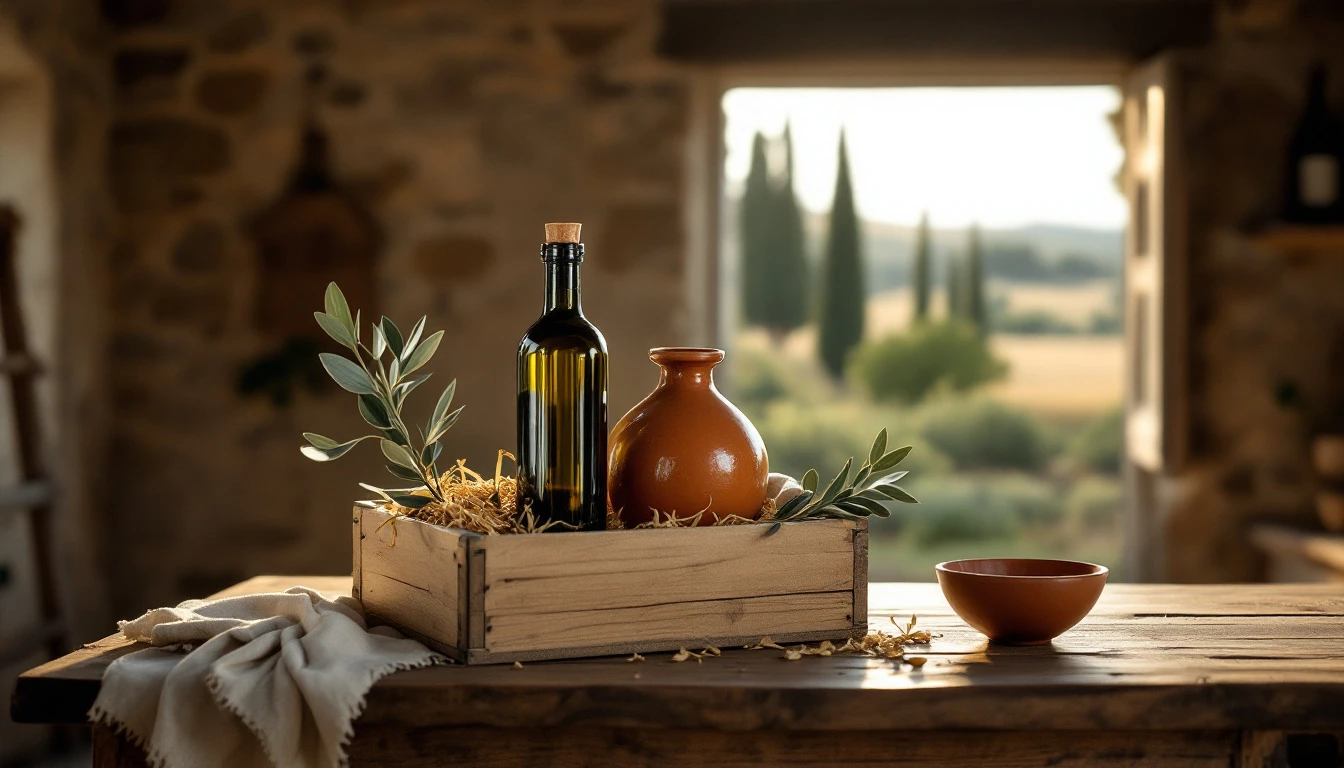
The best gift sets are all three at once. They arrive as an object worth displaying for a season, they reward being opened, and they carry a place with them. A small format, around 100 ml, suits this purpose well: it is an extract to be tasted slowly, not a condiment to be poured over everything.
The Four Tests an Italian Olive Oil Gift Set Must Pass
Before comparing presentation, apply a simple filter. We set it out in detail in four tests an Italian olive oil gift set must pass; in short:
- Origin test: is there a named estate, municipality or grove, or only a region on the label?
- Light test: is the oil in opaque material (terracotta, dark-tinted or coated container) rather than clear glass?
- Freshness test: is the harvest year or date printed, not only a “best before” date?
- Scarcity test: is the run size declared and each piece individually numbered?
Our preference is unambiguous: a set that passes all four with a modest presentation beats an elaborate hamper that passes none. Packaging can be added to any oil. Provenance cannot.
Why Tuscany, Val d’Orcia and Pienza Set the Standard
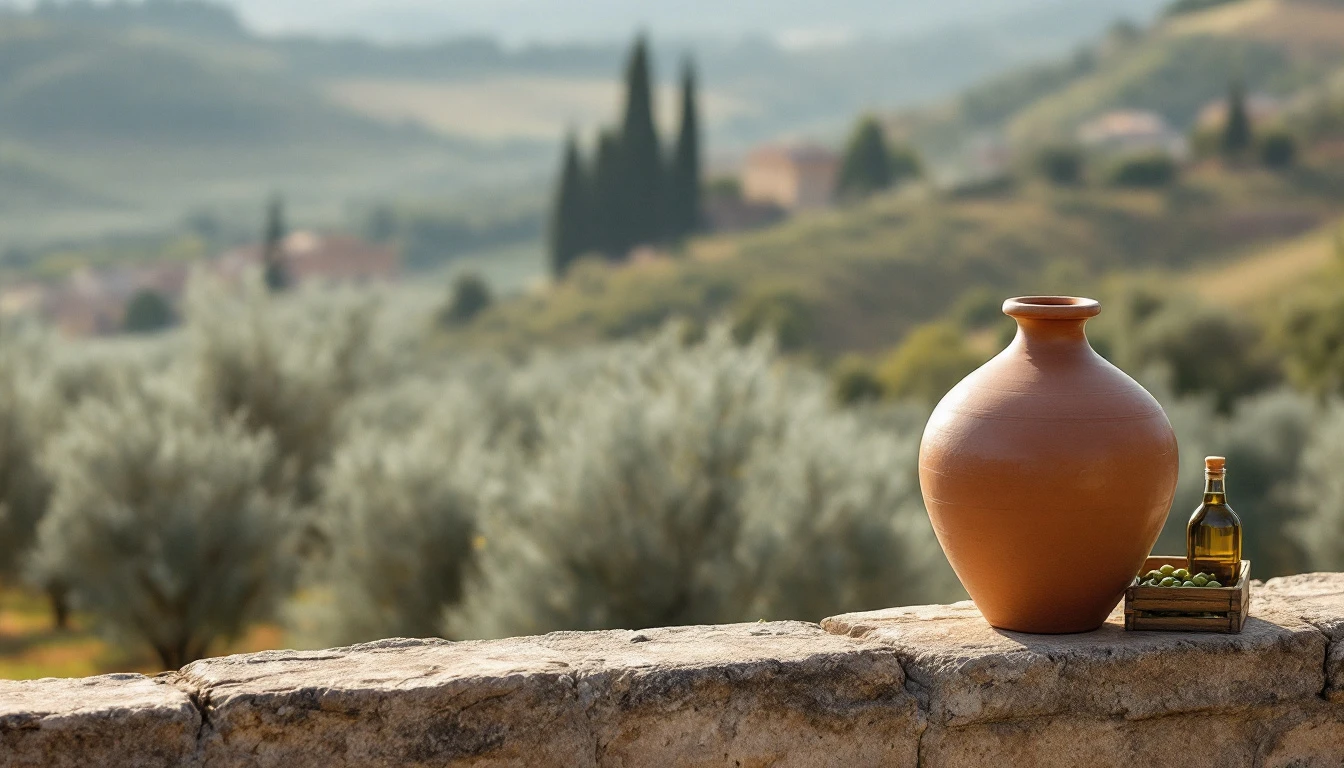
Tuscany has a long tradition of peppery, green, herbaceous oil, and Val d’Orcia is one of its most recognisable landscapes. The valley, with Pienza at its heart, has been a UNESCO World Heritage site since 2004. Pienza itself is the Renaissance “ideal city” commissioned by Pope Pius II in the 1460s. Olive groves here sit on clay-rich hills at altitude, with cool nights and bright days, conditions that tend to produce oils with pronounced aromatic character.
Tuscan cultivars
The classic Tuscan blend rests on a handful of cultivars:
- Frantoio: balanced, fruity, with notes of fresh-cut grass and almond.
- Leccino: softer and sweeter, often used to round off sharper oils.
- Moraiolo: intense, bitter and pungent, rich in phenolic compounds.
- Pendolino: a pollinator cultivar that adds delicate floral notes.
What the Toscano IGP means
The Toscano IGP (Protected Geographical Indication) is an EU designation guaranteeing that olives are grown and the oil produced in Tuscany, with a defined cultivar base and a free acidity limit lower than the 0.8% allowed for generic extra virgin. It is a useful guarantee, but it is not the only route to trust. A named grove with a harvest date can be even more specific, which is why we always check what a label actually proves. For a deeper reading, see what makes an extra virgin olive oil truly Tuscan.
Single Estate and Traceable Origin: Why a Named Grove Beats the Word “Tuscan”
Single estate olive oil comes from olives grown on one identifiable property and milled from that harvest alone. It is the most verifiable category of oil, because someone can point to a place, a year and a person responsible for it.
The word “Tuscan” alone is looser than most buyers assume. Bottling in Tuscany, blending oils from several countries, or simply using an Italian-sounding brand can all coexist with a reassuring label. Our view is that a vague regional claim is a reason to ask more questions, not fewer. We explain the distinction in why a named grove matters more than the word Tuscan.
Questions to ask any producer
- Which grove or estate, and in which municipality?
- Which harvest year, and when was the oil milled?
- Was it milled within hours of picking, and by cold extraction?
- Can the producer share lab analyses on request?
A small producer who welcomes these questions is usually the safest bet. One who deflects them is not.
Polyphenols in Tuscan Extra Virgin: What They Are and What They Tell You
Polyphenols are phenolic compounds naturally present in olives and carried into the oil. Two names appear most often: hydroxytyrosol and its derivatives, and oleocanthal, the compound responsible for the sharp sting at the back of the throat. For a buyer, they matter chiefly as sensory and freshness indicators: they contribute bitterness and pungency, and they help the oil resist oxidation.
We keep this section deliberately factual. Polyphenols are a quality marker, not a medical promise, and we make no health claims about them.
What “high polyphenol” can reasonably mean
- Typical extra virgin oils range from under 100 mg/kg to more than 500 mg/kg of phenolic compounds, depending on cultivar, ripeness and processing.
- EU regulation uses 250 mg/kg of hydroxytyrosol and derivatives as its reference threshold for permitted claims, which is a useful benchmark when a label says “high polyphenol”.
- Early-harvest, green olives, and cultivars such as Moraiolo generally yield higher levels.
The practical rule: a number on the label should be backed by a dated lab analysis. Our guide to how many polyphenols make an olive oil high polyphenol explains how to read these figures. Your tongue is also a reliable first test: a good polyphenol-rich oil tastes bitter and peppery, and may make you cough once.
Harvest Date, Early Harvest and Cold Extraction
Olive oil is a fresh agricultural product, closer to fruit juice than to wine. It does not improve in the bottle, so the date it was made is the real clock.
Early harvest and olio novello
In Tuscany, picking typically begins in October. Early harvest oil comes from olives that are still green or just turning, yielding less oil per kilo but more intense aroma and more phenolic compounds. Olio novello (“new oil”) is the first oil of the season, bottled within weeks of milling, vivid green and notably peppery.
Cold extraction
Cold extraction means the olive paste is kept below 27°C during processing, preserving aromatic compounds that heat would otherwise strip away. It is a legitimate label term in the EU, and one worth looking for.
Reading the date
- A harvest year (for example 2026) is more informative than a best-before date.
- A best-before date typically sits 18 to 24 months after bottling, which tells you little about when the olives were picked.
- For a gift, prefer an oil from the most recent harvest.
We expand on this in why the harvest date is the real clock for unopened Tuscan extra virgin.
How to Store Olive Oil: Light, Heat, Oxygen and the Case for Terracotta
Three forces degrade olive oil: light, heat and oxygen. Each speeds up oxidation, flattening aroma and eventually producing a stale, waxy taste.
- Light: clear glass lets UV and visible light through; oil can show measurable deterioration after weeks on a lit shelf.
- Heat: ideal storage is roughly 14 to 18°C; above 25°C, ageing accelerates sharply.
- Oxygen: once opened, oil begins a slow decline, which is why smaller formats make sense for tasting.
Terracotta versus glass
Dark glass is a decent compromise. Terracotta, being fully opaque, blocks light entirely, and a glazed or sealed interior keeps the oil stable. It is also the traditional vessel of the Mediterranean, used for oil and wine for millennia. Our preference is clear: for a gift meant to be kept, opaque beats transparent every time.
Shelf life, sealed and open
Sealed and stored well, a Tuscan extra virgin keeps its character for around 18 months from harvest. Once opened, we recommend finishing a small vessel within 3 to 4 months for maximum aromatic intensity. See how long Tuscan extra virgin olive oil really lasts for the full breakdown.
How to Taste Olive Oil: Aroma, Bitterness and Pungency
Professional panels judge oil on three attributes: fruitiness, bitterness and pungency. A gift recipient can follow the same method at home in under two minutes.
- Warm it. Pour a teaspoon into a small glass and cup it in your palm for a minute.
- Smell. Look for cut grass, green tomato leaf, artichoke or almond. Rancid, musty or winey notes are defects.
- Sip and aspirate. Draw in air across the oil so it spreads over the palate.
- Wait for the finish. Bitterness registers on the tongue, pungency in the throat. A cough is a good sign, not a flaw.
The best way to use a small, precious oil is raw: over warm bread, a ripe tomato, a simple soup, fresh cheese or grilled fish. Heat wastes the finest aromatics.
Limited Edition, Hand-Numbered: What “Limited” Should Actually Prove
“Limited edition” is an unregulated phrase. It can describe a seasonal label, a gift box or an unspecified batch. A genuinely limited oil gives you evidence you can check:
- A declared run size, stated as a number.
- Individual numbering on each piece, preferably by hand.
- A defined vintage, tied to one harvest.
- A physical seal that shows the piece has not been opened.
Without these, scarcity is just a claim. Our article on why a declared run size and hand numbering matter more than the word limited sets out the reasoning.
A concrete example
The Eleivas 2026 Limited Vintage is a run of exactly 100 terracotta amphorae of 100 ml each, hand-engraved with Roman numerals from I to C and closed with a wax seal. Piece number L is not an approximation of piece number XLIX: each one is accounted for. This is what we mean by treating oil as something to protect, number and keep.
Hand-Thrown Terracotta Amphorae: Etruscan Roots and Modern Craft
The amphora is among the oldest containers in Mediterranean culture. The Etruscans, who flourished in what is now Tuscany from roughly the 8th century BC, produced and traded oil and wine in fired clay, and their descendants still shape clay in the same hills. Terracotta is porous in its raw state and impermeable once fired and finished appropriately, which is why it has served as a storage vessel for thousands of years.
Why a hand-made vessel matters
- No two amphorae are identical: small variations in profile, texture and tone are part of the object.
- The material is tactile: cool, slightly rough, with a weight that suggests substance.
- It connects the oil to place. A Pienza-area olive grove and a Tuscan clay vessel share a landscape and a history.
For collectors and design lovers, the vessel is the second half of the gift. Once the oil is finished, the amphora remains as a keepsake.
Used or Displayed? Gifting Occasions and the Question of Opening
A frequent question is whether a numbered oil is meant to be opened or admired. Our answer: both, in that order. Display the sealed amphora while it is new, then break the seal and taste it. Oil is a perishable product, and keeping it unopened for years defeats the purpose of a vintage.
Occasions that suit this kind of gift
- Corporate and client gifts: discreet, memorable, and easy to ship.
- Host and dinner gifts: a small object that starts a conversation at the table.
- Milestones and holidays: numbered pieces allow a meaningful match, such as a birth year or anniversary in Roman numerals.
- Travel keepsakes: for those who have walked Pienza and want a faithful memory of Val d’Orcia.
If you are buying for a recipient who will open it, add a short note with the tasting steps above and the 3 to 4 month window once opened.
Five Common Mistakes When Buying an Olive Oil Gift Set
- Choosing by the box. Elaborate packaging often compensates for ordinary oil.
- Accepting clear glass. Beautiful on a shelf, damaging to the oil within weeks.
- Trusting “Tuscan” without a named grove. The word describes a mood more often than an origin.
- Ignoring the harvest date. A best-before date is not a freshness guarantee.
- Believing health promises. Be wary of any set that links polyphenols to medical outcomes; the claim is unproven in the way marketing presents it, and serious producers avoid it.
For a wider view on scarcity and format, read our complete guide to limited edition Tuscan extra virgin worth keeping.
Frequently Asked Questions About Olive Oil Gift Sets from Italy
Why choose a 100 ml format for a gift?
Because a small format is designed for tasting, not for the kitchen counter. Fine oil begins to lose aroma after opening, so a 100 ml vessel finished within 3 to 4 months is always at its best. The value lies in the origin, the harvest, the vessel and the numbering, not in the volume.
Can I trust the authenticity of a small Tuscan producer?
Trust should be earned through evidence: a named grove, a stated harvest year, a declared run size and a producer willing to answer questions or provide analyses. Small producers often meet this standard more easily than large blenders, because they control the whole chain from tree to vessel.
Is it meant to be used or only displayed?
Used. The amphora is beautiful enough to display, but the oil is a fresh product intended to be tasted. Display it sealed for a short time, then open it and enjoy it raw, ideally within 3 to 4 months of breaking the seal.
How long does olive oil stay fresh once opened?
For maximum aromatic intensity, about 3 to 4 months in a cool, dark place with the vessel closed tightly. After that, the oil is still safe to eat, but the aroma fades and bitterness and pungency soften.
What about shipping, customs and delivery to the United States?
A sealed 100 ml vessel is compact and straightforward to pack securely. Olive oil is a food product, so US import rules for food apply, and delivery details such as carrier, tracking and customs handling are best confirmed with the producer when you reserve. Always give a delivery address where someone can receive the parcel, as a fragile terracotta object should not be left outside.
What does high polyphenol olive oil mean?
It refers to oil rich in phenolic compounds such as hydroxytyrosol and oleocanthal, usually from early-harvest olives. These compounds create bitterness and pungency. Ask for a dated lab analysis if a number is advertised, and treat the term as a quality descriptor, not a medical claim.
Should the oil be Toscano IGP to be a good gift?
Not necessarily. IGP is a helpful guarantee of regional origin, but a named single estate with a stated harvest date offers more specific traceability. The best choice combines clear origin, proper storage and honest labelling.
Learn More About the Eleivas 2026 Limited Vintage
Everything above is the standard we apply to our own oil: opaque terracotta, a wax seal, hand-engraved Roman numerals from I to C, and a run of only 100. If you would like to see how these principles translate into a single piece, or to ask about origin, delivery and availability, visit the Eleivas 2026 Limited Vintage page and contact form. For broader reading on the gift itself, our guide to choosing a Tuscan gift worth keeping continues where this page ends.