The Four Tests, Answered Directly
An Italian olive oil gift set is worth giving only if it passes four tests: provenance (a named grove or estate, not “Product of Italy”), freshness (a harvest year printed on the pack), protection (opaque or dark packaging that blocks light), and meaning (a limited, traceable run with a maker behind it). Fail one and you are giving a pretty parcel, not an oil.
This is the short version of our fuller guide, Olive Oil Gift Set from Italy: The Complete Guide to Choosing a Tuscan Gift Worth Keeping. Below, each test comes with what to look for on the label and what a good answer sounds like.
Test 1 and 2: Provenance and Freshness
Provenance. “Tuscan” on a front label proves very little. Blended oils can be bottled in Tuscany from olives grown elsewhere, and “Packed in Italy” says nothing about where the fruit grew. A gift-worthy oil names the place: the estate, the village, the valley. In our case, that is the Val d’Orcia, near Pienza. Ask three questions. Who grew the olives? Where are the trees? Who pressed them? If the seller answers in specifics, you are on solid ground. If the answer is a slogan, walk away. Our notes on why a named grove matters more than the word Tuscan go deeper.
Freshness. Olive oil is fruit juice, not wine. It does not improve in the bottle. Most oils are at their best within 12 to 18 months of pressing, and the aromatic peak, the green, peppery, cut-grass intensity, is shorter still. A “best before” date of two or three years away tells you the producer’s legal margin, not the oil’s quality. What you want is a harvest year, for example “2026 harvest.” If the pack shows no vintage, assume the oil has been sitting.
Once opened, the clock runs faster. Oxygen starts working immediately. For maximum aroma, we suggest finishing an opened vessel within 3 to 4 months. For a broader view, see how long Tuscan extra virgin olive oil really lasts.
Test 3 and 4: Protection and Meaning
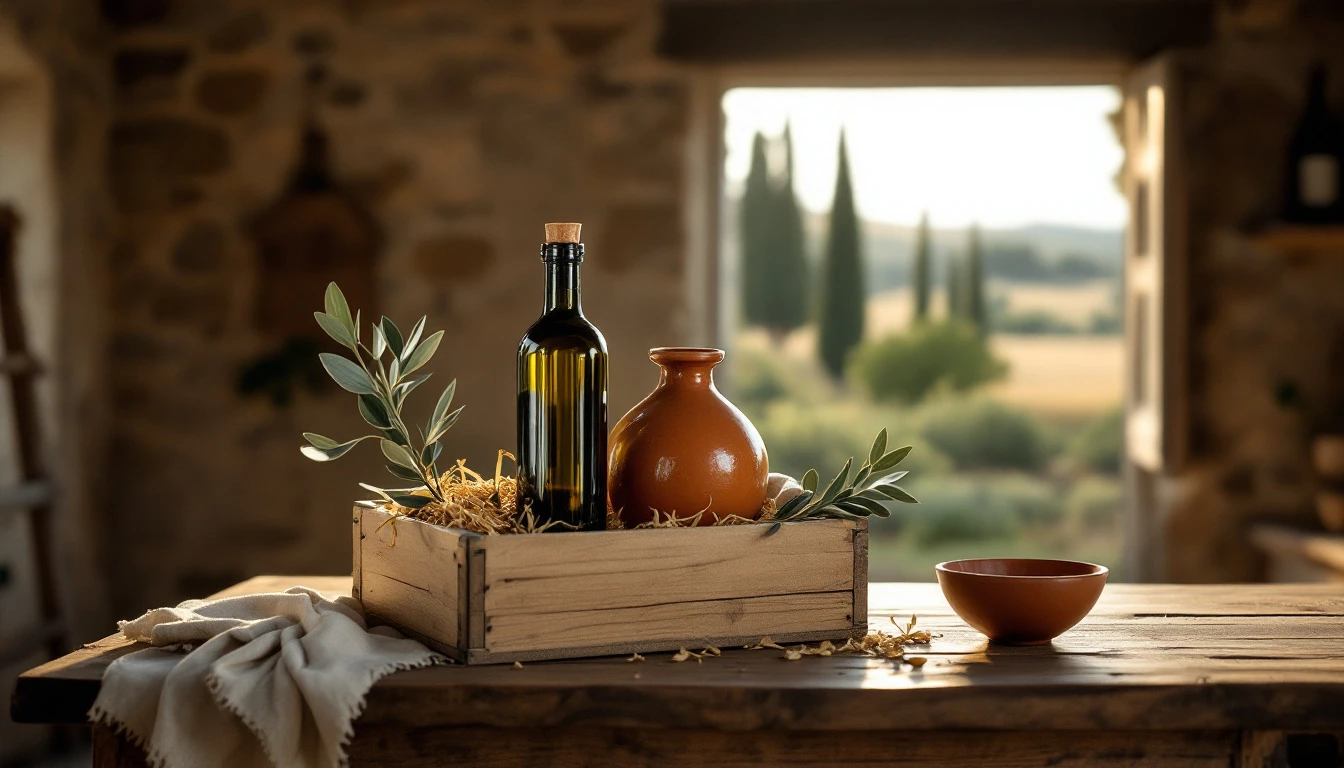
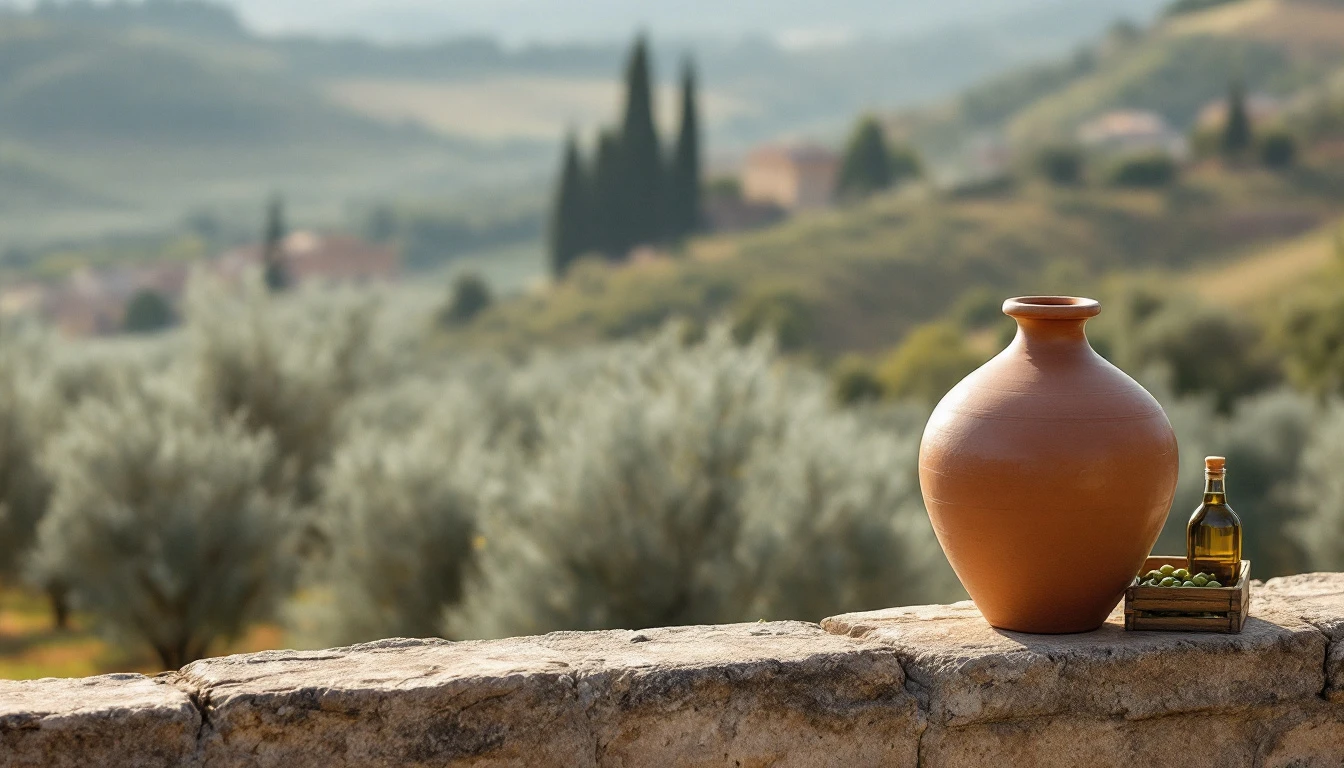
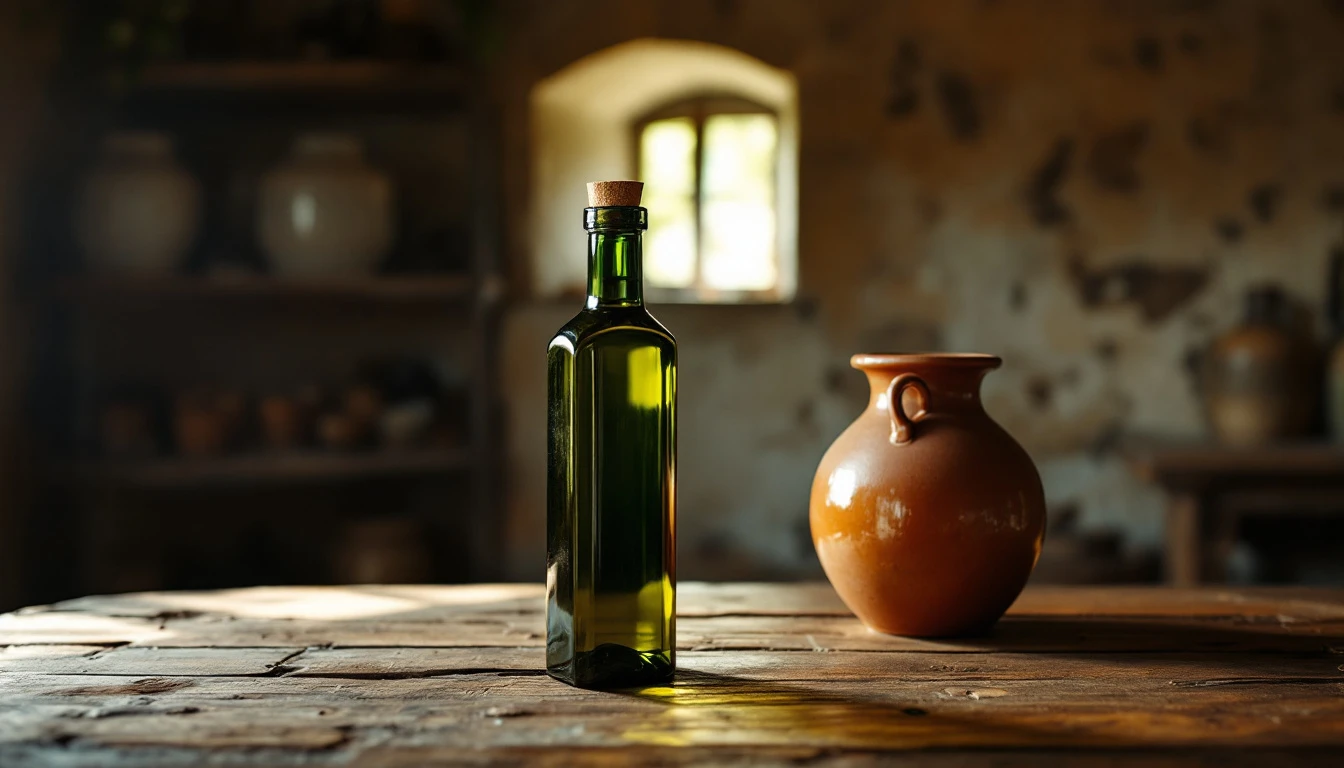
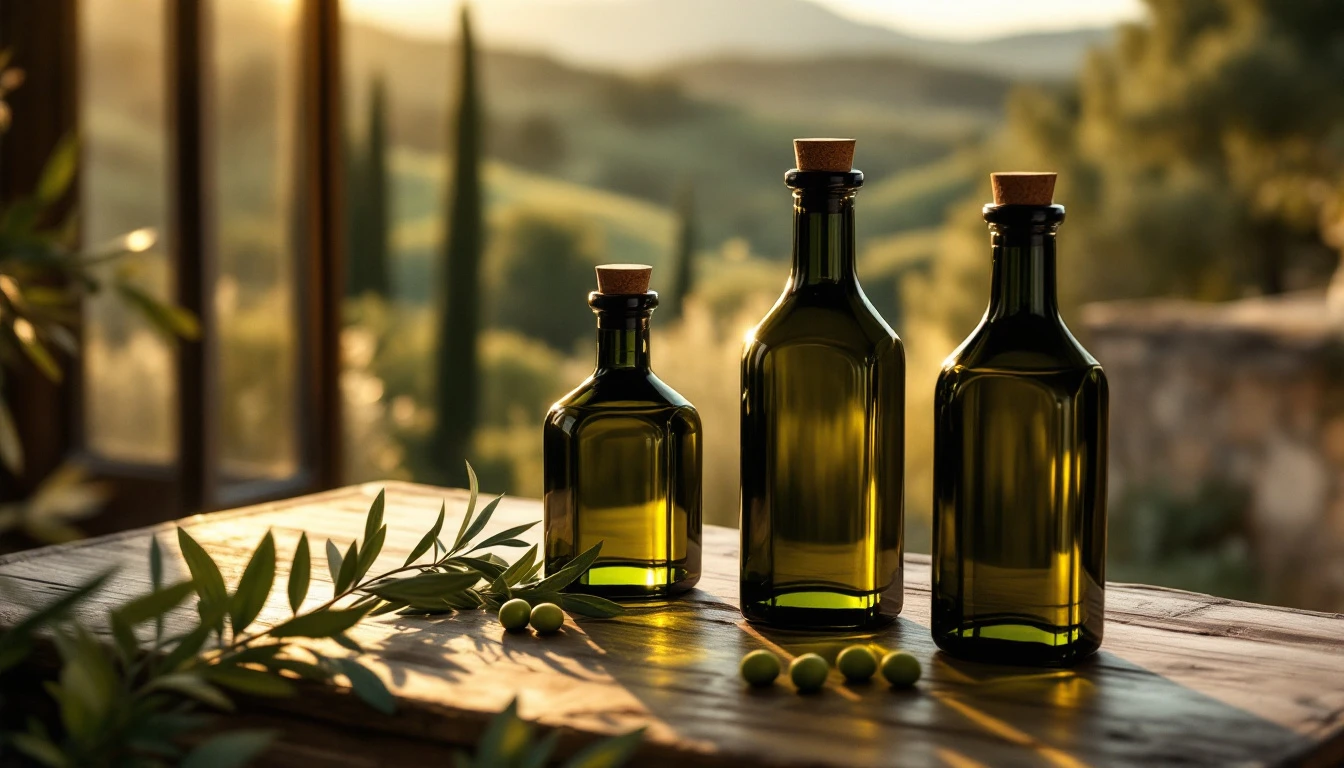
Protection. Light, heat and oxygen are the three enemies of olive oil. Clear glass, the standard of the supermarket shelf, lets light strip away the polyphenols and aroma long before the cap is turned. Dark glass, tin and ceramic are acceptable. An opaque, sealed vessel is better still. This is why we pour our oil into a terracotta amphora closed with wax: it blocks light entirely and keeps the contents stable until the seal is broken. A gift set in a clear bottle with a ribbon fails this test, however beautiful the box.
Meaning. A gift should give the recipient something to say at the table. That means a limited run, a maker and a craft. “Limited edition” is only credible when it can be verified: a stated number of units, individual numbering, a named vintage. Our 2026 Limited Vintage is 100 hand-numbered amphorae of 100 ml each, engraved with Roman numerals from I to C. Anyone can check that the arithmetic holds. For the signals to look for in any brand, read the four verifiable signals of a genuinely limited edition olive oil.
A Quick Scoring Example
Take two gifts at a similar price.
- Gift A: a basket with three 250 ml clear-glass bottles, “Tuscan Style” label, a best-before date 24 months away, no harvest year. Score: 0 of 4 on provenance, freshness and protection. Meaning is decoration only.
- Gift B: one 100 ml numbered terracotta amphora, wax-sealed, named Val d’Orcia grove, 2026 harvest. Score: 4 of 4.
Our position is clear. For most occasions, one exceptional, numbered vessel beats a basket of anonymous bottles. A small volume is not a weakness: 100 ml is meant for finishing, drop by drop, over bread, beans, a ripe tomato or a bowl of soup. It is a tasting, not a pantry staple. If you want to compare this approach with conventional baskets, see what makes an Italian olive oil gift set worth giving.
Common Mistakes When Buying
- Trusting the box. Wood crates, ribbons and bottle counts say nothing about the oil.
- Reading “extra virgin” as a guarantee of quality. It is a legal minimum, not a mark of excellence. It says nothing about harvest date or storage.
- Chasing health claims. Polyphenols matter for flavour and stability, but be wary of any seller who promises medical benefits. Look for an analysis, not a promise.
- Buying on price alone. Fresh, traceable oil from a small grove costs more to make. A very low price usually means a missing harvest date or an unnamed origin.
- Ignoring delivery. For US recipients, check that shipping, customs and protection in transit are handled before you order.
Give an Oil That Passes All Four
If you want a gift that passes every test, the Eleivas 2026 Limited Vintage was built around them. With only 100 amphorae, allocation is limited. Secure your allocation when you are ready.