The Short Answer: A Number You Can Check Beats an Adjective
A declared run size and hand numbering matter more than the word “limited” because they can be verified, and the word cannot. “Limited” has no fixed meaning on an olive oil label: anyone can print it on any bottle. A stated quantity, such as 100 units, with a unique number on each one, turns a vague claim into a countable fact that the producer must stand behind.
Why the Word “Limited” Proves Nothing
Walk the olive oil aisle of any gourmet shop and you will find “limited edition”, “small batch” and “special reserve” in elegant lettering. We know of no labeling standard that says how small a limited run must be. It might mean 500 bottles. It might mean 50,000. Without a number, the reader has no way to tell the difference, and that is precisely why the word is so easy to use.
A declared run size changes the nature of the claim. When a producer publishes the exact figure, the edition becomes finite and accountable. If the number later grows, someone will notice. If it stays fixed, the scarcity is real, not rhetorical.
Hand numbering takes the idea one step further. A number engraved or written on each individual unit links that object to a specific place in the edition. It tells you that someone counted, one vessel after another, and that the total is not a marketing estimate. For a gift, it also gives the recipient something personal: not “a bottle of limited oil”, but number XLVII of a hundred.
This is the principle behind the definition of a genuinely limited edition olive oil: a single harvest, a fixed and declared quantity, a traceable origin and packaging that protects the oil from light. Of those elements, the declared number is the easiest one for a buyer to check, which is why we put it first.
What a Real Count Looks Like: The Eleivas 2026 Example
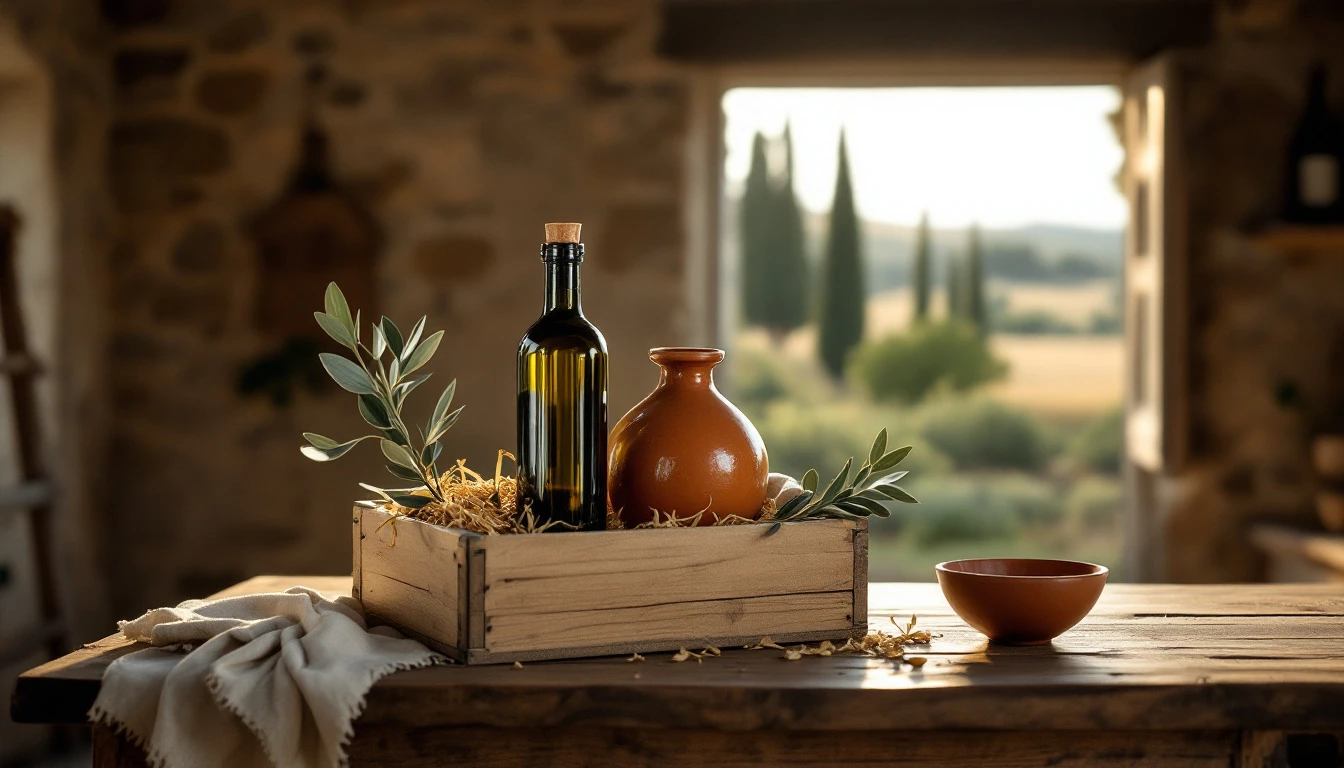
The Eleivas 2026 Limited Vintage is made of 100 terracotta amphorae, each holding 100 ml, each hand-engraved with a Roman numeral from I to C and closed with a wax seal. The arithmetic is simple and checkable: 100 vessels × 100 ml = 10 litres of oil for the entire edition. Depending on cultivar, ripeness and season, a litre of extra virgin oil typically takes roughly 5 to 10 kg of olives, so the whole run is a modest harvest from Val d’Orcia, not a warehouse of stock.
When you evaluate any limited oil, ours or someone else’s, apply this short test:
- Is a number stated? Look for an exact quantity on the label or product page. “Small batch” is a description, not a figure.
- Is each unit individually numbered? Engraved or hand-marked numbers are stronger than a generic “limited edition” sticker applied to every bottle.
- Is the origin specific? A named place such as Val d’Orcia or Pienza can be verified. “Tuscan” or “Italian” on its own cannot.
- Is the harvest year declared? Freshness is measured in months, so a vintage matters as much as a count.
- Is the container opaque? Light degrades oil. A scarce number in clear glass protects the story but not the contents.
The full framework is set out in our guide to the four verifiable signals of a limited edition olive oil, and the broader reasoning sits in the complete guide to limited edition Tuscan extra virgin olive oil.
Common Mistakes When Reading a “Limited” Label
Treating scarcity as proof of quality. A number authenticates how many exist. It does not tell you how the oil tastes. A numbered bottle still has to earn its place through freshness, provenance and protection from light. Our view is plain: numbering is necessary for trust, but never sufficient for quality.
Accepting “limited” as a reason for the price. If a producer cannot state the quantity, the premium is resting on an adjective. Ask what you are paying for: a harvest, a vessel, a count, a place. Each should be nameable.
Ignoring the harvest year. A limited run from an unnamed year can sit on a shelf for a long time. Oil is at its best young. Once the wax seal on an Eleivas amphora is broken, we suggest enjoying it within 3 to 4 months for maximum aromatic intensity.
Assuming a numbered object is only for display. The number belongs to the vessel and the edition, not to a shelf life. The oil is meant to be opened, tasted and shared. A collector can keep the empty amphora, with its numeral, as a memento of the harvest.
Believing health claims that come with the label. Polyphenols are a legitimate subject of interest, but a limited run should earn trust through verifiable facts, not through unproven promises.
Where to Go From Here
If you are choosing a gift or a keepsake from Val d’Orcia, start with the number. It is the one claim on the label that you can count. If you would like to see how a declared run of 100 looks in practice, you can read about the Eleivas 2026 Limited Vintage and secure an allocation while numbers remain.