The Short Answer: Four Tests an Italian Olive Oil Gift Set Must Pass
An Italian olive oil gift set is worth giving when it passes four tests: a verifiable origin, a stated harvest year, packaging that blocks light, and a story the recipient can taste. Ribbons, wooden boxes and the number of bottles inside are decoration. If the oil cannot show where it grew, when it was pressed and how it is protected, you are giving a pretty parcel, not a gift.
Our position is a clear one. For most occasions, a single numbered vessel of Tuscan extra virgin olive oil is a better gift than a basket of three or four anonymous bottles. Olive oil is a fresh, perishable fruit juice. It does not improve on a shelf, and every extra bottle is one more chance for the recipient to taste something tired. This article takes each test in turn. For the wider picture, read our complete guide, Olive Oil Gift Set from Italy: Choosing a Tuscan Gift Worth Keeping.
| Test | What to look for | What to walk away from |
|---|---|---|
| Provenance | A named place, ideally a single estate in Val d’Orcia or elsewhere in Tuscany | “Product of Italy”, “Tuscan style”, “packed in Tuscany” |
| Freshness | A harvest year printed clearly | Only a distant best-before date |
| Protection | Opaque or dark vessel, sealed | Clear glass under shop lights |
| Meaning | A limited run, a maker, a craft | Mass-produced sets with no identifiable maker |
Verifiable Origin: How to Tell a Genuinely Tuscan Gift Oil from a Vague Label
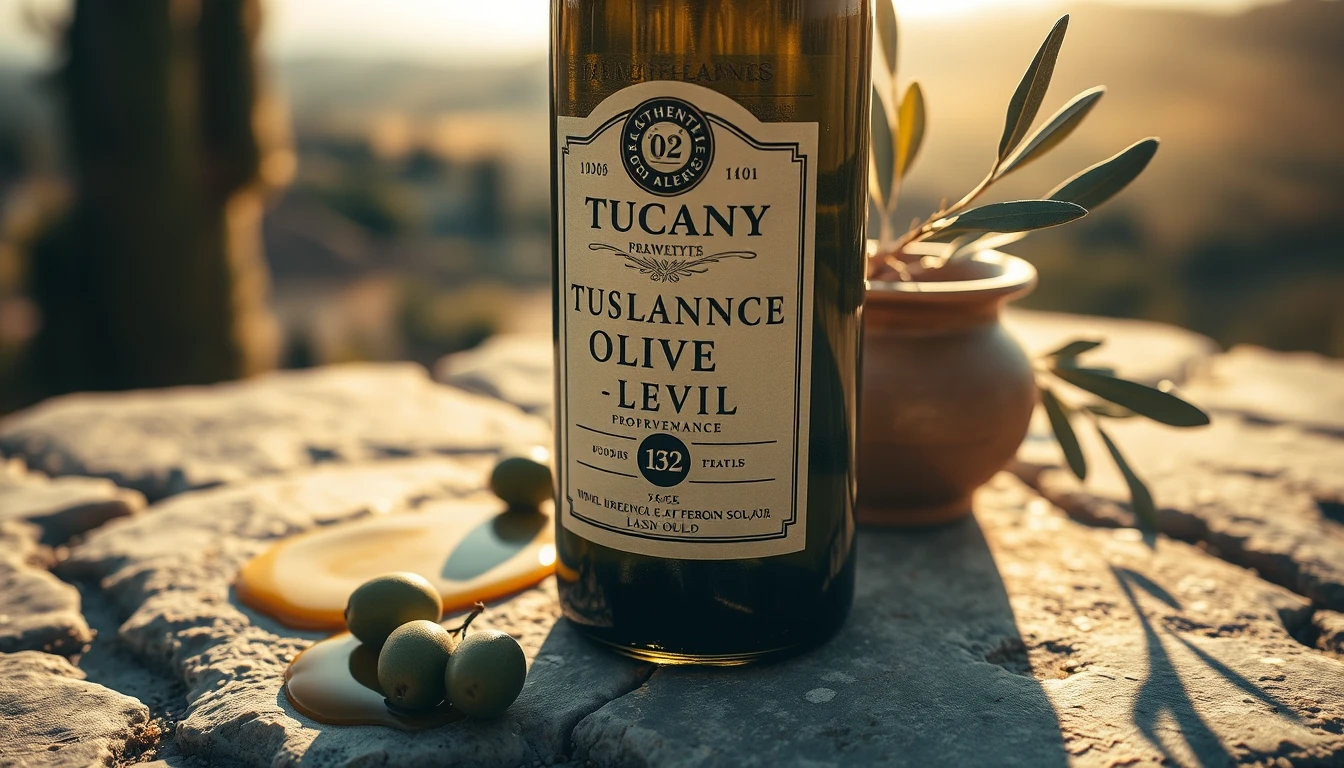
Why “Tuscan” on a label is not proof
A label can say “Tuscan” while the olives were grown, pressed or blended elsewhere. The words are evocative, and that is precisely the problem: they cost nothing to print. A gift that carries a place name it cannot back up is the weakest kind of gift, because the story collapses the first time the recipient asks a question.
What a verifiable origin looks like
Verifiable origin means you can name the place and the people. Look for the estate or the municipality, the harvest year, and a producer who will answer questions about the groves. A single estate is the most traceable form of provenance, because the olives come from one property rather than a blend of lots (our short explainer on what single estate olive oil means covers this in detail).
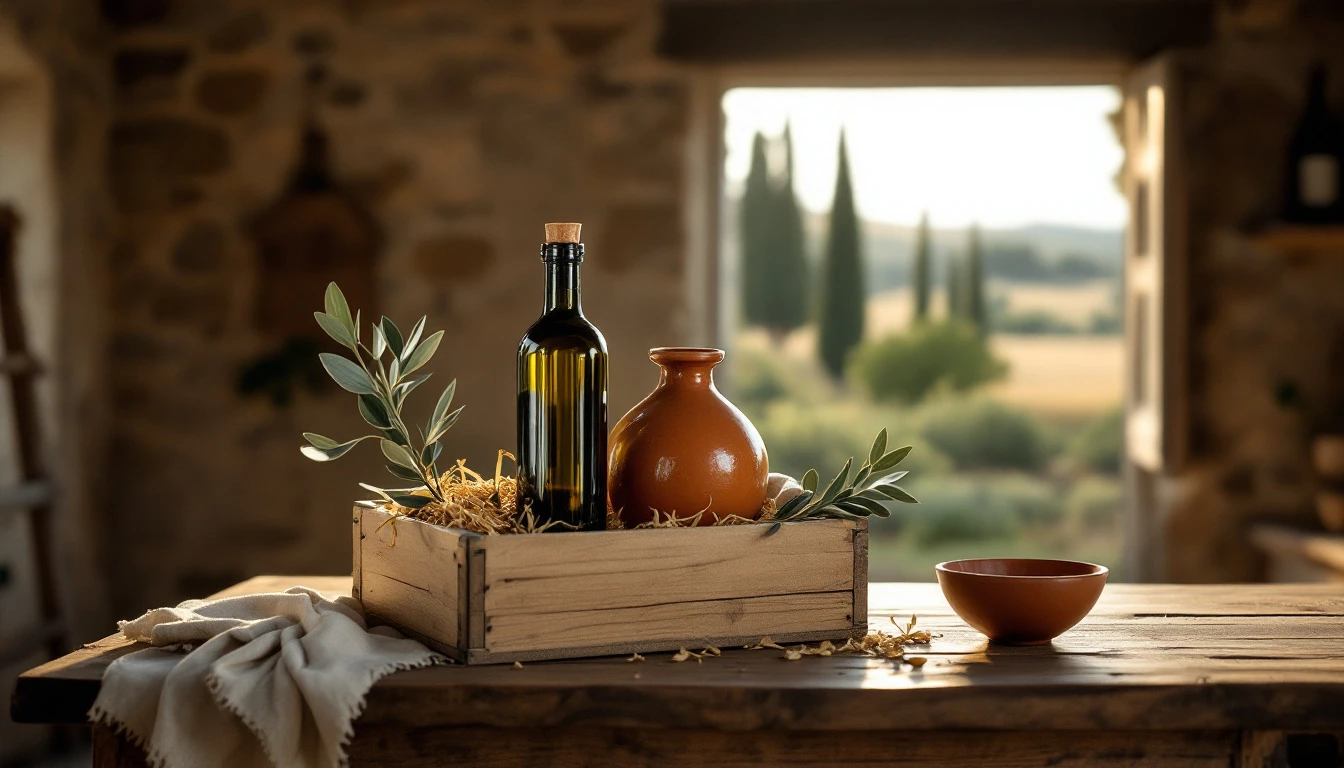
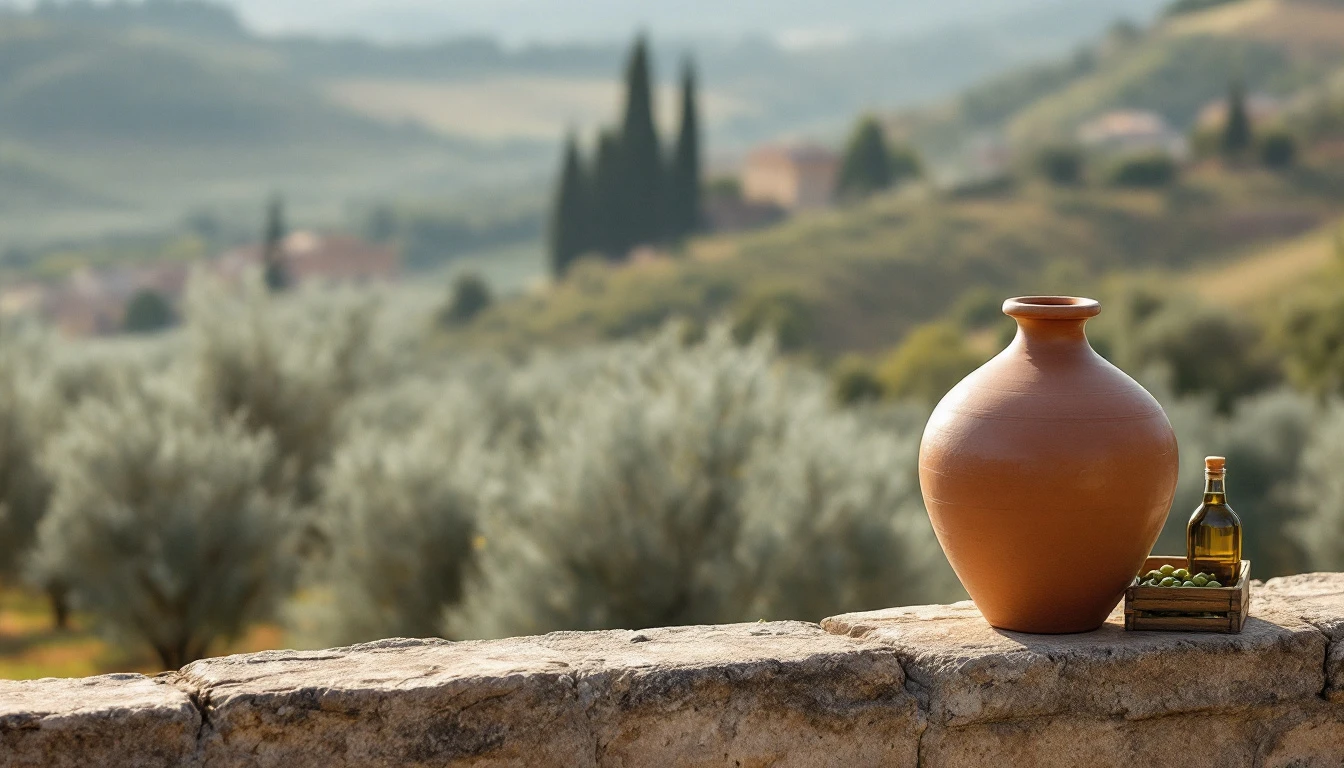
Val d’Orcia and the hills around Pienza are a fitting benchmark: a landscape of cypress-lined ridges and clay soils where olive growing is part of the cultural record, not a marketing device. If a designation or certification is claimed, ask to see it. If it cannot be shown, treat it as absent. We would rather see a small producer say plainly what is known than imply what is not.
Harvest Year and Freshness: Why the Vintage Matters More Than a Best-Before Date
Olive oil is the juice of a fruit, and like any juice it is at its best when young. Most extra virgin oils show their finest aroma within 12 to 18 months of pressing, then slowly lose their green, grassy edge and turn flat. A best-before date two years away tells you nothing about when the olives were picked. A harvest year tells you almost everything.
That is why we treat the vintage as a headline, not a footnote. When you give an oil, you are giving a moment: the autumn the olives were picked, the weeks they were pressed. A recipient who can read “2026” on the vessel understands immediately that this is a fresh, seasonal product and should be enjoyed as one.
Freshness also shapes the way the oil tastes. Young oil often carries a green fragrance of cut grass, artichoke or almond, followed by a pleasant bitterness and a peppery catch at the back of the throat. Those sensations come from phenolic compounds, including oleocanthal (the compound linked to that peppery sting) and hydroxytyrosol. These compounds are naturally more present in fresh oil and fade with time, light and heat. We discuss them as markers of taste and freshness only, and never as medical promises. If this interests you, our short guide to high polyphenol olive oil explains how to recognise a fresh, character-rich oil.
Opaque Terracotta or Clear Glass: How Packaging Protects an Olive Oil Gift
The three enemies of olive oil
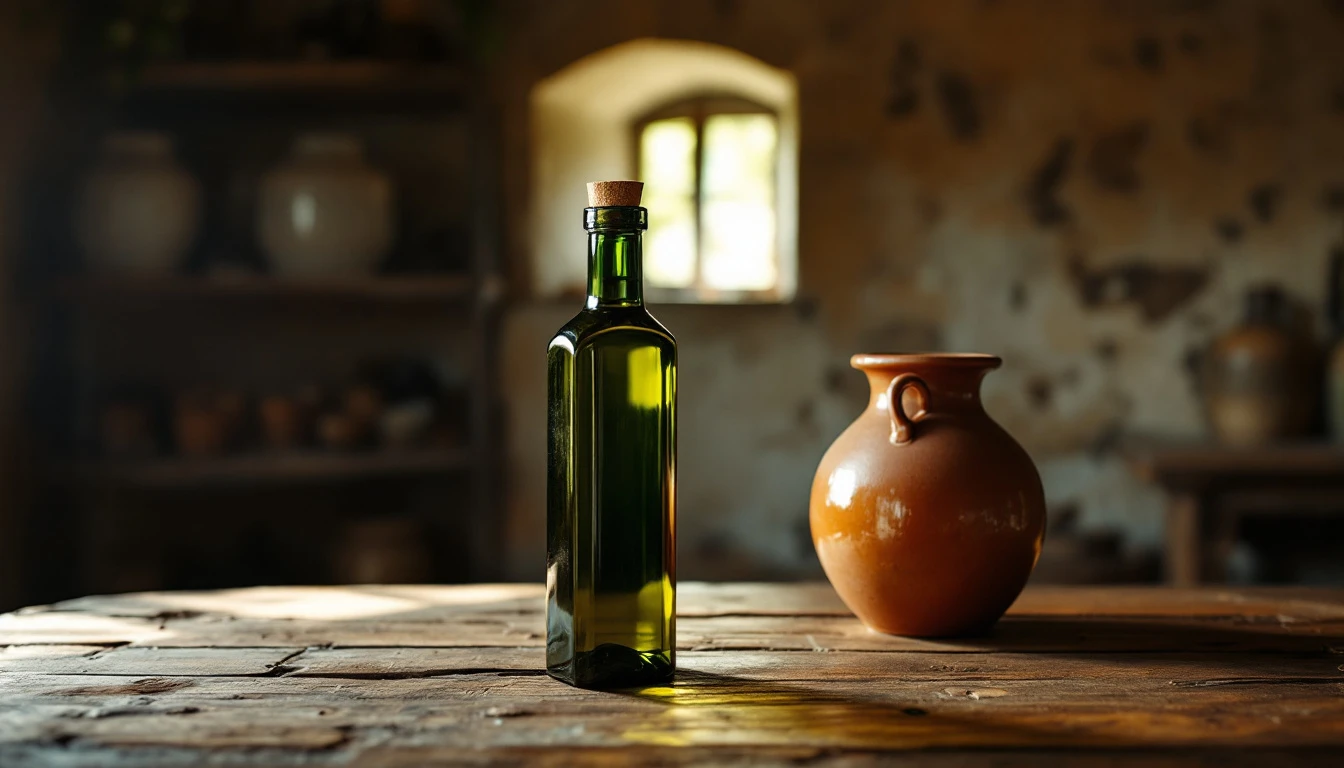
Light, heat and oxygen are the three forces that age olive oil. Of the three, light is the one most buyers overlook, because clear glass looks beautiful on a shelf. Yet a transparent bottle lets the oil’s colour shine and its character fade. Much of the oil sold in gift boxes sits for months under shop lighting before it is ever wrapped.
Why a terracotta amphora is the better vessel
An opaque vessel solves the light problem at once. Terracotta is also a material with deep roots in the Mediterranean: Etruscan and Roman cultures stored and carried oil in fired clay for centuries. A hand-thrown amphora therefore does two jobs. It protects the oil, and it gives the gift a physical presence that a bottle cannot match.
This is the principle behind the Eleivas 2026 Limited Vintage: 100 ml of Tuscan extra virgin olive oil in an opaque terracotta amphora, closed with a wax seal. The seal is visible proof that the vessel has not been opened. It also marks a ritual, because the recipient breaks it by hand. We reject clear glass for this reason: it works against the oil it holds.
Is 100 ml Enough? Why a Single Numbered Amphora Beats a Basket of Bottles
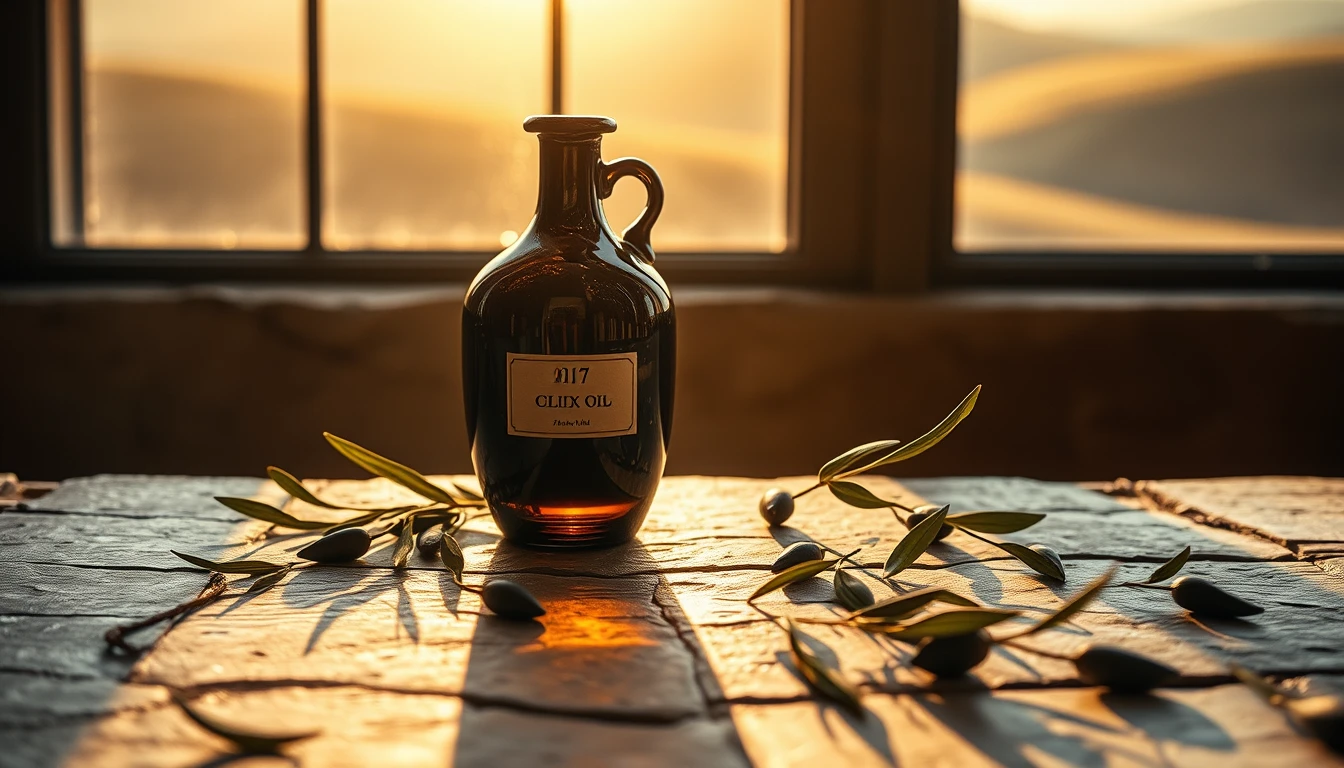
The most common objection is fair: why choose 100 ml when a gift basket looks more generous? The answer is that volume is not what the recipient remembers. A basket of anonymous bottles invites the question “what do I do with all this?” A single, exceptional oil invites a different one: “what does this taste like?”
Consider how a fine oil is actually used. It is not poured into a pan. It is a finishing touch: a few drops over warm bread, a ripe tomato, a bowl of white beans or a slice of aged pecorino. At that scale, 100 ml is a considerable number of tastings, and every one of them is an occasion rather than a routine. A large gift is also more likely to outlast its freshness, which defeats the purpose.
The second reason is meaning. Each Eleivas amphora is one of only 100, hand-engraved with a Roman numeral from I to C. A numbered object has an identity. It can be given to a client, a host or a collector, and no one else has quite the same piece. That is what we mean by a genuinely limited edition: a small, countable run, not a marketing phrase. A fixed run of 100 also means that availability is limited by design, which is why reserving early matters.
Use It or Display It? How Long a Gift Oil Stays at Its Best After the Seal Is Broken
A gift oil is meant to be tasted. The amphora is handsome enough to display, but the oil inside is a fresh product with a window of peak aroma, and it is a pity to let that window pass. Our advice is simple: enjoy it, then keep the empty vessel as a memento of the vintage.
Here are the practical facts:
- Before opening: store the sealed amphora in a cool, dark place away from the stove, radiators and direct sun.
- After the seal is broken: for maximum aromatic intensity, we recommend enjoying the oil within 3 to 4 months. Oxygen begins its work once air enters the vessel.
- Between uses: keep the stopper closed and the vessel out of heat and light. Do not keep it beside the cooker.
- How to taste: pour a small amount into a glass, warm it gently in your hand, and smell first. Then sip, and notice the green fruit, the bitterness on the tongue and the pepper in the throat. All three are signs of a lively oil.
For a deeper look at the science of keeping oil, see our short answer on how long olive oil lasts.
If you are giving the oil abroad, plan the timing. Think of the gift as a vintage with a season rather than a pantry item, and tell the recipient when the seal is best broken. A short handwritten note with the advice above turns the oil from an object into an experience.
Frequently Asked Questions
What makes an Italian olive oil gift set worth giving?
Four things: a verifiable origin, a clearly stated harvest year, packaging that blocks light, and a story or craft behind it. If any of these is missing, the gift is likely to taste ordinary and mean little.
Why choose a 100 ml amphora instead of a larger gift set?
Fine oil is used as a finishing touch, a few drops at a time, so 100 ml provides many tastings while staying fresh. What you pay for is provenance, protection and rarity, not volume. A numbered vessel is also far more memorable than a basket of unmarked bottles.
Can I trust the origin of a small Tuscan producer?
Trust what can be checked: a named place, a harvest year, a producer who answers questions and a limited, countable run. Be wary of vague labels such as “Tuscan style” and of any claim, certification or analysis that cannot be shown on request.
Is the amphora meant to be used or only displayed?
Both, in order. The oil is meant to be enjoyed, ideally within 3 to 4 months of breaking the wax seal, and the terracotta amphora stays afterwards as a keepsake of the vintage.
How is the gift delivered to the United States?
Each allocation is reserved directly with the producer, and delivery arrangements, including shipping and customs for the US, are confirmed at the time of reservation so that the amphora arrives safely.
Give One Oil Worth Remembering
A gift oil should be judged by light, freshness and provenance, not by its label. If you want to give something that is numbered, protected, sealed and traceable to Val d’Orcia, secure your allocation of the Eleivas 2026 Limited Vintage before the run of 100 is complete.