What Oleocanthal Is and Why Tuscan Extra Virgin Can Make You Cough
High oleocanthal olive oil is extra virgin olive oil that carries a notable concentration of oleocanthal, a phenolic compound that produces a sharp, peppery sting at the back of the throat. You recognise it by taste before you read any number: a green aroma, a clean bitterness on the tongue, and a pungency that makes you cough once or twice. That cough is not a flaw. It is the signature of a fresh oil that was pressed and kept with care.
Oleocanthal is a secoiridoid, a type of polyphenol, identified in 2005 by researchers at the Monell Chemical Senses Center in Philadelphia. Its name joins oleo (olive), canth (sting) and al (aldehyde). The sting is a sensory event: the compound stimulates a receptor in the throat known as TRPA1, the same family of sensors that responds to other pungent plants. Nothing more needs to be claimed for it here, and we make no medical claims. What matters for a buyer is that the sting is a reliable, living clue to freshness.
Published analyses report a very wide spread, from under 50 mg/kg to several hundred mg/kg. That range is the whole reason a label cannot do the work for you. Our complete guide to high oleocanthal olive oil covers the full phenolic family; this article focuses on one practical question: how do you tell?
Oleocanthal versus hydroxytyrosol: which one do you taste?
Hydroxytyrosol is a second phenolic compound often cited in olive oil. It contributes to bitterness and to the oil’s resistance to oxidation, but it does not produce the throat sting. If an oil makes you cough, oleocanthal is the likely reason. If it is merely bitter, other phenols are at work. Both are welcome; they simply speak at different points of the palate.
How to Taste for Oleocanthal: The Cough Test and a Three-Step Method
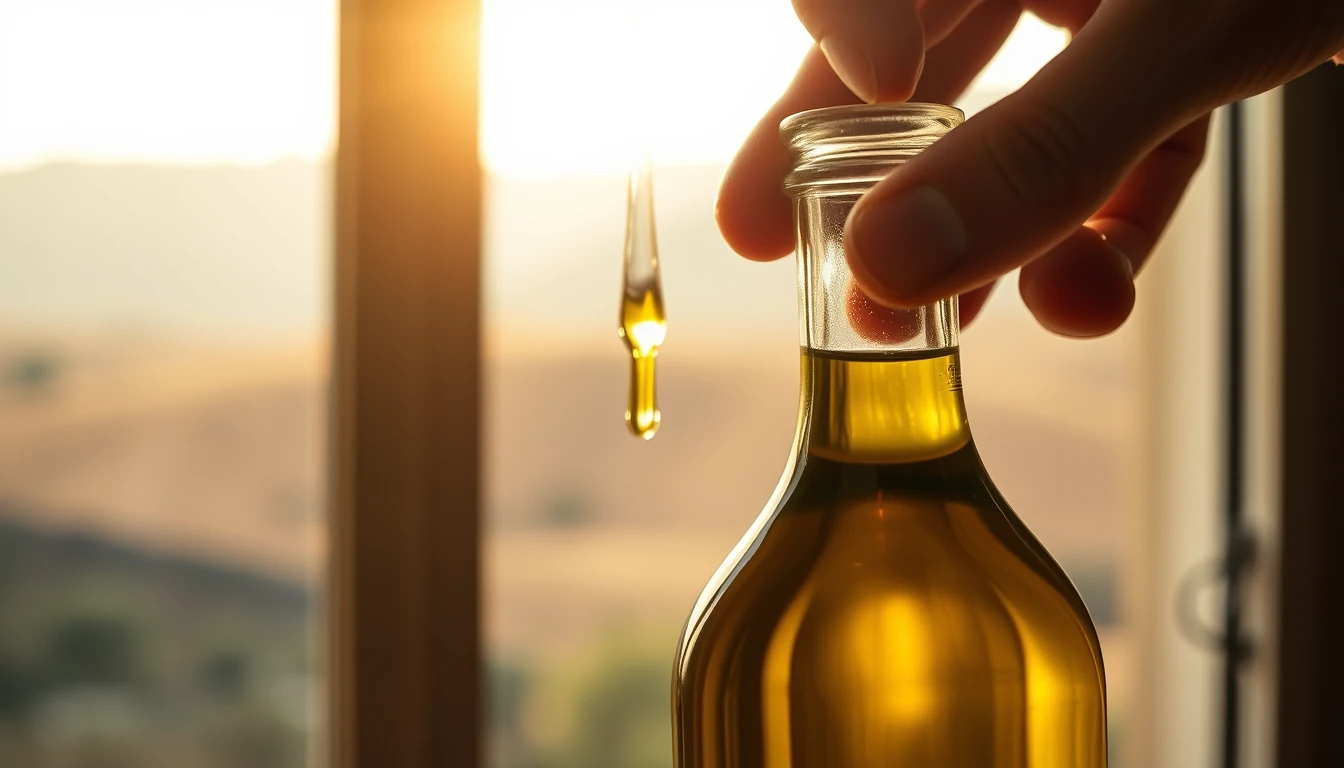
The most dependable instrument you own is your own throat. Professional panels follow a formal protocol, but a home version is enough to separate a vivid oil from a flat one.
- Warm and smell. Pour a teaspoon into a small glass. Cup it in your palm, cover it with your other hand and wait a minute. Lift the hand and breathe in. You are looking for cut grass, green tomato leaf, artichoke or almond. Rancid nuts, crayon or damp cardboard signal oxidation.
- Sip and draw air. Take a small mouthful, press it against the palate, then pull a little air in through your teeth. This spreads the oil and carries the aromas to the back of the nose.
- Wait for the finish. Bitterness arrives on the tongue first. Pungency comes later, in the throat, and lingers for several seconds. The more intense and longer the sting, the more phenolic the oil tends to be.
Our position is clear: a good oil should be a little uncomfortable. If it slides down without any bitterness or pungency, it may still be pleasant, but it is not the character described here. Balance matters, though. A sting that is harsh, acrid or accompanied by a sour or fusty smell is a defect, not a virtue.
What the sting is not
Pungency is not heat from pepper, and it is not acidity. Free acidity is a chemical measure of fat breakdown; an oil can be low in acidity and still taste dull. Judge the oil by aroma, bitterness and pungency together, never by one alone.
What Raises Oleocanthal: Cultivar, Early Harvest and Cold Extraction in Tuscany
Oleocanthal is not added; it is preserved or lost. Four decisions shape how much ends up in the bottle.
- Cultivar. Tuscan groves are traditionally planted with frantoio, leccino and moraiolo, among others. Frantoio and moraiolo are commonly associated with a more peppery, bitter profile, while leccino tends to be softer. Blends are balanced by the miller.
- Ripeness at harvest. Olives picked early, while still green or just turning, hold more phenols and yield less oil. In Val d’Orcia this means picking in October and early November, not waiting for the fruit to turn black and sweet.
- Extraction. Cold extraction means malaxing the paste below 27°C, which limits heat damage to delicate aromas and phenolic compounds. Speed from tree to mill matters too: hours, not days.
- Season. Rainfall, drought and temperature change phenol levels from year to year. A vintage label is therefore meaningful, because two harvests from the same grove are never identical.
This is why single-estate provenance carries real weight: a producer who controls the grove, the picking date and the mill can explain every one of these choices. For the wider picture of what makes an oil Tuscan, see our guide to Tuscan extra virgin olive oil: origin, freshness and craft.
Reading a Label and Lab Report: What Actually Documents High Oleocanthal
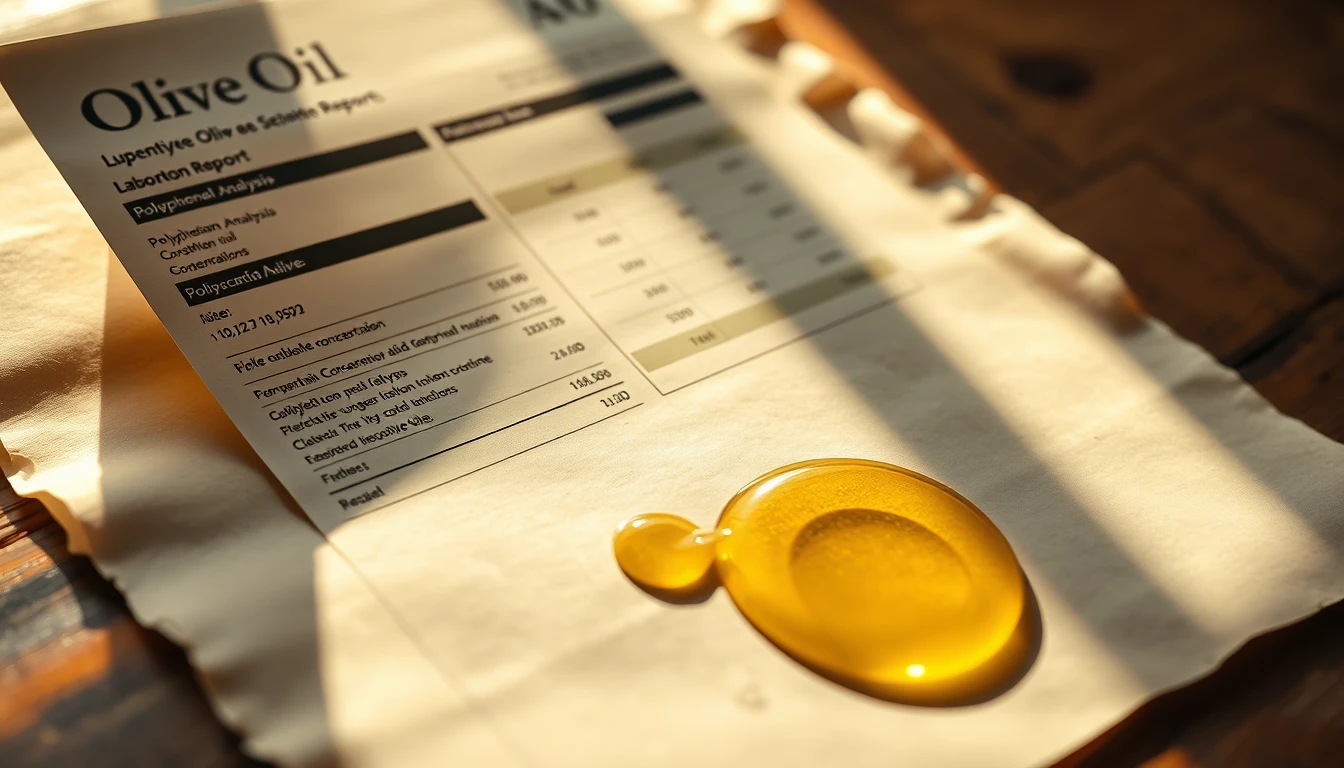
Because the number varies so widely, the question is what a serious producer can show you. We reject vague “Tuscan” wording with no verifiable origin, and we reject unproven health claims about polyphenols. Here is how to separate evidence from decoration.
| Clue | What it tells you | Reliability |
|---|---|---|
| Harvest year and pressing date | Freshness; phenols decline with time | High, if specific |
| Named estate, village and lot number | Traceable provenance | High |
| Laboratory analysis (total phenols, oleocanthal, peroxide value) | Measured composition for that lot | High, if dated and attributed |
| Opaque or dark container | Protection from light after bottling | High |
| Words like “robust” or “rich in polyphenols” alone | Marketing language | Low |
| Clear glass bottle | Light exposure shortens the life of the oil | Warning sign |
Two further points. First, an oleocanthal figure is only meaningful when it is tied to a harvest, a lot and a date of analysis; a number floating on a label without these is decoration. Second, the figure at pressing is not the figure in your kitchen. What you taste months later depends on storage, which is the next subject.
Why Light and Time Erase Oleocanthal: Storing High-Phenol Oil in Terracotta
Oleocanthal is fragile. Light, oxygen and warmth degrade phenolic compounds, and the sting fades first. Much oil sits in clear glass on shelves under bright lighting, and by the time it is poured, its green character is already gone. A bottle can say “early harvest” and taste like nothing.
The remedy is simple, and it is the reason for our choices. Keep oil away from light, keep it cool (roughly 14-18°C is ideal), close it tightly, and use it while its aroma is alive. For a deeper look at timelines, our guide on how long olive oil can last sets out what to expect before and after opening.
The amphora as a working vessel
The Eleivas 2026 Limited Vintage is held in an opaque, hand-thrown terracotta amphora of 100 ml, closed with a wax seal. Only 100 exist, each hand-engraved with a Roman numeral from I to C. The terracotta blocks light entirely, which clear glass cannot do, and the small volume means the oil is meant to be tasted, not left to age on a shelf. Once the seal is broken, we recommend enjoying it within 3-4 months for maximum aromatic intensity. Use it drop by drop: on warm bread, a ripe tomato, a white bean soup, a slice of fresh pecorino. We do not publish a polyphenol figure that we cannot document, and we would rather you trust your throat than a claim.
That answers the common doubt about whether such an object is for display or for use. It is both: a numbered piece worth keeping, and an oil meant to be opened. If you wish to taste what this guide describes, you can secure your allocation of the Eleivas 2026 Limited Vintage directly through the Eleivas home page.
Frequently Asked Questions

Does a stronger cough always mean better olive oil?
No. Pungency is one positive attribute among several. A great oil balances fruitiness, bitterness and pungency. A harsh sting accompanied by a musty or sour smell indicates a defect rather than quality.
What is a good oleocanthal level?
There is no single official threshold. Published analyses range from under 50 mg/kg to several hundred mg/kg, depending on cultivar, harvest and storage. A figure matters only when tied to a named lot, a harvest year and a dated laboratory report.
Can I tell high oleocanthal oil by colour?
No. Colour comes from chlorophyll and carotenoids and is often masked by tasting glasses. Rely on aroma, bitterness and the pungent finish in the throat.
How long does the peppery sting last after opening?
Oleocanthal declines with exposure to air, light and warmth. For the Eleivas 2026 Limited Vintage, we recommend using the oil within 3-4 months of breaking the wax seal for the best aromatic intensity.
Is high oleocanthal oil meant for cooking?
It is best used raw, in small quantities, where its aroma and pungency can be fully appreciated. Heat dulls the very qualities you paid attention to find.