Traceable Origin: Why a Named Grove Matters More Than the Word “Tuscan”
An extra virgin olive oil is truly Tuscan when the olives were grown and milled in Tuscany, the oil meets the legal extra virgin standard (free acidity of 0.8% or less, no sensory defects, some fruitiness), and the producer can show you the grove, the harvest year and the mill. The adjective alone proves nothing. Traceability does.
This is the first thing a master miller checks, and the first thing a buyer should check too. “Bottled in Italy” describes a factory, not a hillside. “Product of the EU” describes a blend that may never have touched Tuscan soil. A genuine Tuscan oil names a place: an estate, a village, a valley. For the wider framework, our guide to Tuscan extra virgin olive oil: origin, freshness and craft sets out how each of these elements fits together.
Three tests you can run on any label
| Test | What a genuine Tuscan oil shows | Warning sign |
|---|---|---|
| Origin | A named estate or village in Tuscany | “Bottled in Italy”, “Product of the EU” |
| Harvest date | A stated harvest year, ideally within the last 12–18 months | Only a vague “best before” date |
| Light protection | Opaque or dark packaging | Clear glass on a lit shelf |
If a bottle fails two of the three, treat “Tuscan” as decoration. We go further on why the grove-level answer is the strongest one in what single estate olive oil means: it is the most verifiable kind of provenance because one place, one harvest and one mill can be checked.
Harvest Date and Freshness: How to Read the Year on a Tuscan Label
Olive oil is a fresh fruit juice, not a wine that improves in the cellar. Its green, grassy aromas and its bitterness are at their most expressive in the first months after milling, which in Tuscany happens in autumn, typically from October into November. A harvest year on the label is therefore more informative than any adjective.
Our rule is simple: look for the harvest year first, and prefer oil pressed within the last 12–18 months. A “best before” date only tells you when the producer stopped guaranteeing the oil; it can be set up to two years after bottling and says nothing about when the olives were picked.
Why early harvest changes the character
Olives picked early, while still green and just turning, yield less oil but more aromatic and more pungent oil. Later harvests give a rounder, softer result. Neither is wrong, but the classic Tuscan profile, vivid and slightly austere, comes from an early, attentive pick followed by milling within hours.
What happens once the bottle is open
Oxygen, light and heat are the three enemies. After the seal is broken, aromatic intensity begins to fade. For a small, precious format we advise enjoying the oil within 3–4 months for maximum aromatic intensity. If you want the full reasoning, read how long olive oil lasts, the short answer for Tuscan extra virgin.
The Tuscan Flavor Profile: Green Fruit, Bitterness and a Peppery Finish
Provenance on paper must be confirmed in the glass. A genuinely Tuscan extra virgin oil usually shows three signals: green fruit and cut grass on the nose, often with artichoke or green almond; a clear bitter note on the tongue; and a peppery sensation at the back of the throat, sometimes strong enough to prompt a cough. Many first-time tasters read that cough as a flaw. It is the opposite.
Where the bitterness and pepper come from
Both sensations come largely from phenolic compounds, often called polyphenols. Polyphenols are natural molecules in the olive that contribute bitterness, pungency and stability. Oleocanthal is the compound most associated with the peppery throat sensation; hydroxytyrosol contributes to bitterness and to the oil’s resistance to oxidation. We discuss taste and freshness only, and make no medical claims. To learn how to recognise these notes, see high oleocanthal olive oil and how to recognise it.
The cultivars behind the taste
Tuscan groves are traditionally planted with a blend of three cultivars:
- Frantoio: fruity, balanced, with grassy and almond notes.
- Leccino: milder and sweeter, softening the blend.
- Moraiolo: intense, bitter and pungent, often the backbone of a robust oil.
Our view: a taste that is bitter and peppery in balance, rather than bland or greasy, is the most reliable sensory sign of a Tuscan oil made with care.
Toscano IGP or Single Estate: Which Proof of Origin Tells You More
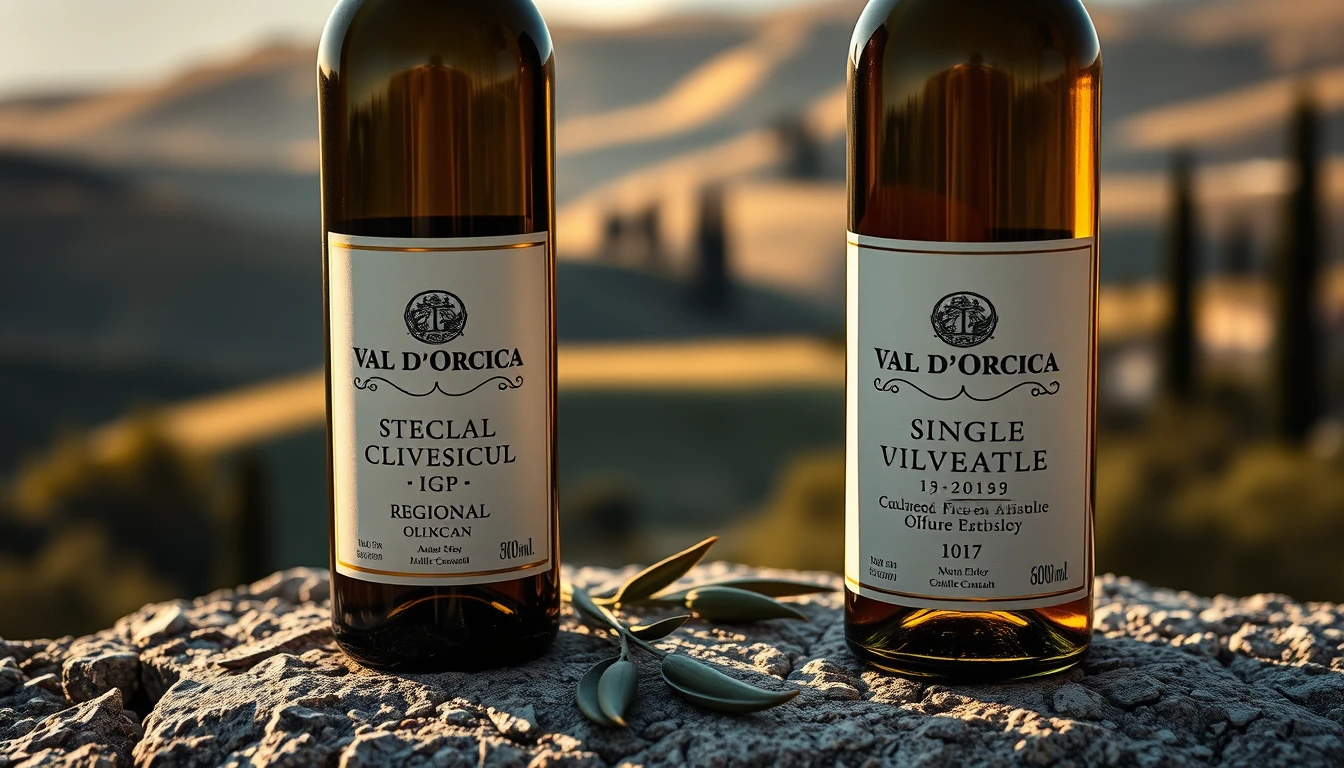
Buyers often ask whether the Toscano IGP mark is enough. IGP (Indicazione Geografica Protetta) is a European protected geographical indication: it certifies that the oil comes from Tuscany and follows a defined production specification, with controls along the chain. It is a real, useful guarantee of region.
But a regional mark still covers a very large territory and many producers. It tells you the oil is Tuscan; it does not tell you which hill, which grove or which mill. That is why our editorial preference is clear: for a gift or a keepsake, the strongest proof is a named single estate with a stated harvest year, ideally combined with a regional designation rather than replaced by it.
Questions to ask a small Tuscan producer
- Where exactly are the groves, and which valley or village?
- In which year and month were the olives harvested?
- Where were they milled, and how quickly after picking?
- How is the oil protected from light and heat until it reaches me?
A producer who answers these four questions without hesitation has earned trust. One who answers with marketing language has not. Context also helps: the Val d’Orcia, a valley in southern Siena province inscribed on the UNESCO World Heritage list in 2004, and Pienza, whose historic centre was inscribed in 1996, give a real geography to point to, not a slogan.
Light-Proof Packaging: Why a Terracotta Amphora Protects Tuscan Oil Better Than Clear Glass
An oil can be Tuscan in origin and still lose its Tuscan character before it is poured. Light accelerates oxidation, and clear glass offers no defence. This is why we refuse clear bottles outright: the oil may look golden on a shelf, but it is ageing while it waits.
Opaque vessels, whether dark glass, steel or terracotta, block light entirely. Terracotta has a further heritage: clay amphorae carried oil and wine across the Mediterranean in Etruscan and Roman times, precisely because they were opaque, sturdy and cool to the touch.
The Eleivas 2026 Limited Vintage as a worked example
Our approach treats oil as something to protect, number and keep. The Eleivas 2026 Limited Vintage is a run of only 100 hand-numbered terracotta amphorae of 100 ml each, hand-engraved with Roman numerals from I to C, closed with a wax seal. The vessel is opaque by design, and each number makes the origin of that particular amphora individual and traceable.
Is it for display, or for the table?
Both, in sequence. The amphora is an object worth keeping, but the oil is meant to be tasted. Once the wax seal is broken, enjoy it within 3–4 months, in small drops over bread, a ripe tomato or warm vegetable soup, where its bitterness and pepper can be fully appreciated. If you are choosing for someone else, our guide to the Tuscan olive oil gift set from Italy explains what makes a gift worth keeping.
If you want a verifiable Tuscan oil with a named origin, a harvest year and protective packaging, secure your allocation of the Eleivas 2026 Limited Vintage while the run of 100 amphorae lasts.
Frequently Asked Questions
Does “Tuscan” on the label guarantee the oil comes from Tuscany?
Not by itself. Only a named estate or village, a stated harvest year and a traceable mill give you real evidence. A regional mark such as Toscano IGP adds an extra layer of guarantee on region.
What is the legal standard for extra virgin olive oil?
Extra virgin olive oil is mechanically extracted, with free acidity of 0.8% or less, no sensory defects and some fruitiness. Tuscan oils must meet this standard and also express the regional profile of green fruit, bitterness and pepper.
Why does a Tuscan oil make me cough?
The peppery sensation in the throat is linked to phenolic compounds such as oleocanthal. In a fresh, well-made oil it is a sign of character, not a defect.
How long does the oil stay fresh once the seal is broken?
For maximum aromatic intensity, we recommend enjoying it within 3–4 months of opening. Store it away from light and heat, with the vessel closed.
Is a small 100 ml format meant to be used?
Yes. The amphora is collectible, but the oil is a finishing touch to be tasted in drops, not an everyday cooking oil. The small format keeps it fresh from the first drop to the last.