What “Single Estate” Means on an Olive Oil Label
Single estate olive oil is extra virgin olive oil made only from olives grown on one farm, or one contiguous group of groves, and milled and bottled under the producer’s own control. Every step leads back to one place and one harvest. That is why it is the most verifiable kind of oil: you are not asked to trust an adjective. You can ask which grove, which year, which mill and how many bottles exist, and a genuine producer can answer.
The phrase is not a legal grade, and that is the first thing to understand. “Extra virgin” is the legal grade: mechanically extracted oil with free acidity of 0.8% or lower and no sensory defects. “Single estate” describes provenance. The two work together. Extra virgin tells you the oil passed a quality threshold. Single estate tells you where it came from, and whether anyone can prove it.
For a fuller map of the subject, our guide to single estate olive oil, provenance, freshness and Tuscan craft covers each of these ideas in depth. Here, we focus on one question: why this style of oil gives a buyer something solid to hold on to.
Single Estate vs Monocultivar vs Blended Olive Oil
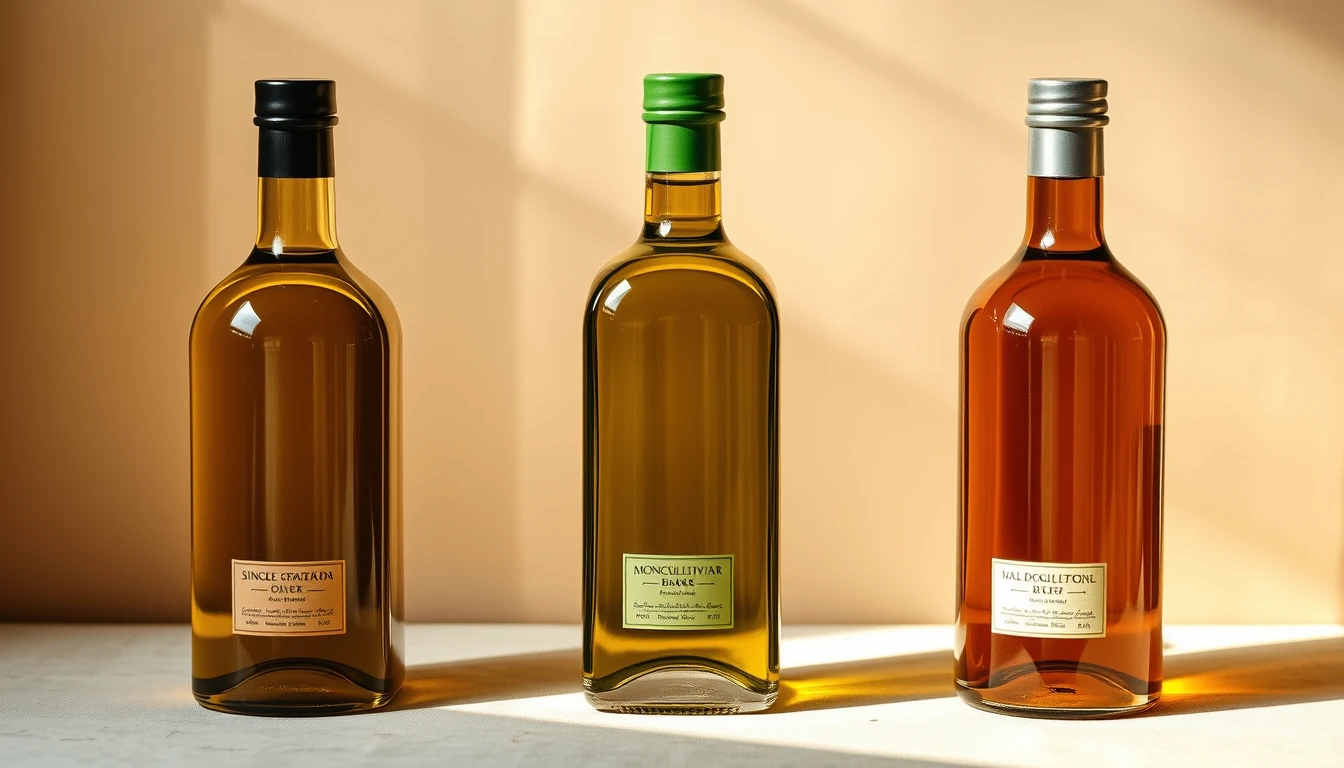
These three terms are often confused, yet they answer different questions. Our view is simple: provenance should come first. A cultivar tells you about flavor. An estate tells you about truth.
| Term | What it describes | What you can verify |
|---|---|---|
| Single estate | One farm or contiguous groves, one producer controlling harvest, milling and bottling | Place, harvest year, mill, bottle count |
| Monocultivar | Olives of one variety only (for example Frantoio, Leccino or Moraiolo), possibly from several farms | Variety, but not necessarily where it grew |
| Blend | Oils of several varieties, often several farms, sometimes several countries or harvests | Very little beyond the legal grade |
The categories can overlap. An oil may be both single estate and monocultivar, or a single estate blend of the classic Tuscan varieties. Blending is a respectable craft when a miller balances Frantoio’s fragrance with Moraiolo’s bitterness. The problem arises only when the blend is anonymous. A single estate bottle blends within its own grove, and the label can say so.
Why a Single Harvest Year Makes Olive Oil Traceable
Place is half the story. The other half is the vintage, the year of harvest, which matters as much as the grove. Olive oil is a fresh product. Its aroma, its green bitterness and its peppery finish are at their most vivid in the first months after milling and fade steadily afterward. An oil without a harvest year cannot tell you how old it is.
A single estate producer harvests once a year from one property, mills within hours of picking and bottles that one pressing. The result is a clean chain:
- Grove: a defined parcel of land, ideally one you could locate on a map.
- Harvest: a single season, with the year printed on the label.
- Mill: the same hands that picked the olives oversee the cold extraction, meaning the paste is kept at a low temperature (below 27°C is the common threshold for the term) to preserve aroma.
- Bottling: a finite number of containers, each traceable to that pressing.
Compare this with a bottle labeled only “Product of Italy.” It tells you the final country of packaging, and little else. It may hold olives from several countries and several harvests. A bottle that names its estate, its year and its quantity leaves far less room for vagueness.
How to Verify a Small Tuscan Olive Oil Producer
A fair objection is: how can I trust a small producer I have never met? The answer is that trust is not required, because a genuine single estate oil leaves evidence. Before buying, look for these signs.
A place you can actually name
“Tuscan” on its own is a vague label. Tuscany is a large region with very different landscapes. A credible producer names the area, such as Val d’Orcia or Pienza, and can describe the groves: altitude, exposure, the varieties planted. Our guide to Tuscan extra virgin olive oil explains what regional character really looks like.
A harvest year and a lot or bottle number
Look for the year of harvest, not just a best-before date. A lot code or individual number shows that the producer counts what leaves the estate.
A container that protects the oil
Light is one of olive oil’s main enemies, alongside heat and air. Clear glass exposes oil to light for its entire shelf life. A producer who chooses dark glass, tin or opaque terracotta is showing that they care about what happens after bottling, not only before it.
Honest claims about polyphenols
Polyphenols are natural compounds in olives, including hydroxytyrosol and oleocanthal, that contribute bitterness, pungency and stability. A trustworthy producer speaks about them factually and avoids medical promises. Be cautious about any label that claims results it cannot support. If you want to explore the topic, start with what makes the best high polyphenol olive oil. Numbers on a label should come with a lab analysis you can request.
A Numbered Single Estate Edition: What Verifiable Looks Like in Practice
The clearest proof of traceability is a finite, counted run. The Eleivas 2026 Limited Vintage is built on that idea: 100 hand-numbered terracotta amphorae of 100 ml each, engraved by hand with Roman numerals from I to C and closed with a wax seal. Because the run is limited to 100, each vessel can be matched to its place in the edition. The oil is sealed in opaque terracotta, away from light, and the number engraved on the vessel is a record rather than a decoration.
This is also how we answer the question we hear most often: is it meant to be used or only displayed? Both are possible, but oil is made to be tasted. Once the wax seal is broken, the oil is best enjoyed within 3-4 months for maximum aromatic intensity. Keep the amphora in a cool, dark place, away from the stove, and pour it over simple things: warm bread, a ripe tomato, a soft cheese, a plain bean soup. A small format is a deliberate choice. It encourages you to use the oil while it is at its best, rather than letting a large container fade in the pantry.
For a deeper look at how oil ages and why storage matters, see our guide on how long olive oil can last.
If you are choosing for yourself or as a gift, the test is the one described above. Ask for the place, the year, the quantity and the proof. A single estate oil can answer all four. The Eleivas 2026 Limited Vintage terracotta amphora was made to answer them, and with only 100 vessels, you can secure your allocation before the run is complete.
Frequently Asked Questions About Single Estate Olive Oil
What does single estate olive oil mean?
It means the oil comes only from olives grown on one farm or one contiguous group of groves, and is milled and bottled under the producer’s control. This makes the origin and harvest year traceable.
Is single estate the same as monocultivar?
No. Single estate refers to where the olives grew. Monocultivar refers to the olive variety. An oil can be one, both or neither.
Is single estate olive oil always extra virgin?
Not automatically. “Single estate” describes provenance, while “extra virgin” is a legal grade requiring free acidity of 0.8% or lower and no sensory defects. Look for both on the label.
How can I check a small producer’s claims?
Ask for the harvest year, the name of the area, the mill, the number of bottles produced and a lot or bottle number. A genuine estate will answer clearly and may share lab analysis on request.
How long does single estate oil stay fresh after opening?
Aroma fades with air and light. For a 100 ml vessel such as the Eleivas amphora, we recommend enjoying it within 3-4 months of breaking the seal for maximum aromatic intensity.